Home
  English
  Arabic
  Russian
  Chinese
Help the victims of war: make a donation to the ICRC today!
colombia-tvnews-280307
Archived page (may contain outdated information)

29-03-2007  TV news footage  
TV News Footage - Colombia. ICRC steps up aid and protection for victims of armed conflict
After decades of armed conflict in Colombia, more and more civilians are being caught up in the fighting. In its Annual Report for Colombia, which will be published on Thursday 29 March, the ICRC describes how thousands of people are having to deal with the devastating effects of conflict in their daily lives. This video contains two stories: 1) Helping the displaced and destitute; and 2) Family visits in Colombian prisons

TITLE: ICRC steps up aid and protection for victims of armed conflict in Colombia

The ICRC's Annual Report for Colombia, published on 29 March, reveals that hundreds of thousands of people are still suffering the devastation of conflict


Date & location: Bogotá, Colombia, 28 February - 1 March 2007
Duration: 10 mins
Camera: Patrick Mounoud
Producer: Virginie Louis
Source: ICRC – access all

Preview extracts (RealMedia stream 56Kbs - 128kbs):


For broadcast tapes and information on footage: Virginie Louis, International Committee of the Red Cross, Geneva,

This report will be distributed free-to-air and rights free over the Eurovision News Exchange network on 28 February 2007 at 14h00 GMT on the Eurovision Worldfeed towards Asia, the Americas and Europe and the Middle East as well as at 11h45 GMT on the Eurovision Special News exchange. Please find the technical details hereunder.


SHOTLIST

Story 1 - Helping the displaced and the destitute


1. Bogotá city, rooftops, children in the street

2. IV Jaime Umberto, displaced from Puerto Yaca, Magdalena Medio region
"I feel awful because of what happened to me. I wouldn’t wish it on anyone. It makes me very sad, because I want to help my sons to progress, but I can’t. I used to have a stable home, and I have lost everything, everything."

3. ICRC delegates arrive to see Jaime and children

4. Jaime and his wife Sandra go to the ICRC office and tell their story

5. IV Jaime Umberto
"I have two sons, two grown-up boys, and the 17-year-old told me that some bad men were going to pay him money and give him a motor bike. I told him ‘I’m sorry, but there’s no way I’m going to let you go – they want to use you to fight the war.’ So two men came to see me and threatened me, and one of them tried to kill me."

6. Jaime and Sandra are given household items, mattresses, etc.

7. Jaime and Sandra exchange vouchers for food in a local supermarket

8. Jaime and Sandra go home and unload their shopping

9. IV James (older son)
"They come with a truck and take you into the mountains (Las Transmissores), and if you don’t go with them, they’ll kill you, or you’ll be thrown into the river with the alligators.”

10. IV Sandra (mother)
"I don’t want to tell the neighbours my story, because they think displaced people are thieves."

11. IV Paola (daughter)
"We have to tidy up the kitchen, tidy up the room, we don’t like to quarrel. Sometimes we visit our cousin, we play with her. I don’t like it here, I miss my school very much.” [Cries]

12. Father comforts her


Story 2 – Family visits in Colombian prisons

1. La Picota prison, Bogotá, outside shots

2. ICRC delegate is searched before going into prison

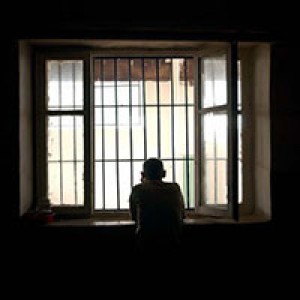
3. Interior of prison, courtyard, prisoner behind bars, prison life, exercising using water bottles as dumbbells

4. ICRC delegate interviewing Rigoberto (prisoner) in private


5. IV Rigoberto, prisoner
"I’m very happy that I’m going to see my family, it’s eight months since I saw them. We’ve only been able to talk on the phone, and every time we talk, my mother starts to cry.

Here it’s not like outside. Outside you can work, you can support your family, I used to help my mother. But here inside it’s difficult."

Maria, her sisters, her half sister and her brother arrive at the prison

6. IV Maria Melila Noa Siquigua, mother of detainee (Spanish)
"I’m so happy I’m going to see him, because it’s been eight months since I last saw him."

7. Security checks – Maria is searched and fingerprinted before entering the prison

8. The family enters the prison courtyard

9. Rigoberto awaits his family

10. Emotional reunion between family, Maria in tears, Rigoberto greets his little nephew.

11. IV Maria
"It’s unbearable living in the house without my son, he means everything to me. It’s fantastic to be with him here. I feel so unhappy when I think of him shut up in here, I miss him so much. He’s like my own right hand to me. But there’s nothing I can do. I feel helpless."

12. Rigoberto returns to jail.

ENDS 10 mins


STORY

After decades of armed conflict in Colombia, more and more civilians are being caught up in the fighting. In its Annual Report for Colombia, published on Thursday 29 March, the ICRC describes how thousands of people are having to deal with the devastating effects of conflict in their daily lives. Hundreds of thousands have been forced to flee their homes, many leaving all their possessions behind. The report also provides an overview of the conflict's continuing violations of international humanitarian law (IHL), which have resulted in the displacement, disappearance, attacks against people and kidnapping of thousands of civilians. Attacks against medical personnel continue, obstructing access to basic health care in conflict areas where there have also been deaths or injuries due to anti-personnel mines.

In response to the huge scale of human suffering, the ICRC is increasing its budget by 15% for 2007, making Colombia one of the organization's biggest operations.

Helping the destitute and the displaced
Colombia has one of the largest populations of displaced persons in the world.
Death threats, violent clashes and the killing of family members, together with pressure to cooperate with different parties to the conflict, caused a constant flow of displaced people throughout 2006. The problem is worst in the departments of Nariño, Cauca, Antioquia and Chocó, with Afro-Colombians and indigenous people among the hardest hit. Many of the displaced seek safety in and near the cities, where they face social and economic marginalization. The majority will never be able to return to their homes. Women and children make up more than half the displaced population. They are particularly vulnerable and need special attention.

Thousands arrive in the capital Bogotá, hoping to find security and work. Some are fleeing death threats, others the horror of losing husbands, sons or other family members, killed or kidnapped by armed groups. They are left destitute in a strange city, reliant on friends and family. Jaime Umberto came to Bogotá with his family in December 2006, from the Magdalena Medio region in northwest Colombia, having borrowed money from his uncle. Armed groups had tried to recruit his sons and threatened to kill him if he resisted. He abandoned his house and possessions, and fled to Bogotá in search of safety. Now he feels helpless, "I feel awful because of what happened to me,” he says, “I wouldn’t wish it on anyone." His children have found it hard to settle, and they miss their old school.

His wife found a job as a cleaner after two months, but the family have very little income and are staying with a cousin. Jaime tries to find casual work on building sites. They get help from the ICRC, which provides emergency aid for three months, including pillows, mattresses and kitchen utensils. The families also receive vouchers (worth 44,000 pesos per person per month), which they can exchange for food in the local supermarket.

Families arrive in a strange city, where they are isolated and marginalized. ICRC counsellors help them find State support, register as displaced persons, obtain health care, enrol their children in schools, find additional emergency help or apply for longer term assistance, including job training. The ICRC assisted over 60,000 new arrivals in 2006, and has handed out over 21,000 food vouchers.

Since 2005, the ICRC has noted a gradual increase in the number of displaced people to whom it provides assistance. The organization has been helping displaced persons in Colombia for 10 years, with numbers expected to reach one million by the end of 2007.


Family visits in Colombian prisons
The conflict has landed thousands of people in jail, convicted or suspected of involvement with armed groups. When the main breadwinner is imprisoned, their family often finds it extremely difficult to survive, let alone pay the travelling costs to visit them in jail. The ICRC helps to cover these costs, last year enabling 1,835 detainees to see their families.

La Picota Prison in Bogotá is the second largest in the city and holds both 'ordinary' prisoners and those detained in connection with the conflict. Rigoberto was arrested eight months ago, charged with involvement with an armed group, and has now been sentenced to 30 years in jail. His family live a 20-hour drive away in Puerto Asis in the south of the country, where they were displaced by conflict two years ago. His mother, Maria, lives with his sisters and step-sisters, and had been relying on Rigoberto for income since her husband died. She now finds it extremely difficult to make ends meet, and misses her son desperately.

Earlier this month she was able to go to Bogotá to see him for the first time since he was arrested, at home, eight months ago. Without financial help from the ICRC, such a journey would be impossible. She travelled with her daughters, nieces and nephews. It was her first visit to Bogotá and she could not wait to see her son, "I miss him so much. He’s like my own right hand to me. But there’s nothing I can do, I feel helpless."

The ICRC regularly visits places of detention, working with the authorities to improve living conditions and holding private interviews with prisoners detained in connection with the conflict, to discuss their conditions of detention. It also organizes visits so that family members can stay in touch, and delivers Red Cross messages – letters containing family news, which are hand-distributed all over the country. In 2006, ICRC delegates carried out 671 visits to 365 places of detention in Colombia, visiting over 7,000 detainees.

For more information, please contact Murielle Gras, ICRC press Officer ++41 79 217 32 24 Virginie Louis Audio-Visual News Producer +41 79 251 93 14


SATTELLITE PARAMETERS

28/03/07 14:00-14:10 UTC Eurovision 07/026453 version #1

Eurovision Network Services confirmation
EBU REF 07/026453/01

Date: 28/03/07 timing: 14:00-14:10 UTC WF
GENEVE
ICRC Colombia

Origin:
ZZEBU GNVE Path: GNVE FI03-806 F0/F1

Destination:

FOR ASIA
Distribution network:
Timing: 1400-1410 UTC
ASIASAT 100.5 deg East TXP 11A CHANNEL 9MHZ G2
UPLINK FREQ.: 6329,5 MHZ POL X BY AS UP4
DOWNLINK FR.: 4104,5 MHZ POL Y
625 Pal 4/3 MPEG 4:2:2 66665 hsymb/s FEC 7/8
OP MODE: HIGH QUALITY
AUDIO:1 SOUND MONO
AUDIO:2 SOUND MONO
AUDIO:3 N/A
AUDIO:4 N/A

FOR EUROPE AND THE MIDDLE EAST
Timing: 1400-1410 UTC
EUTELSAT W3A 7 deg East TXP B1 CHANNEL 9MHZ D2
UPLINK FREQ.: 14323 MHZ POL Y BY GNVE ZZEBU UP2
DOWNLINK FR.: 11023 MHZ POL X
625 Pal 4/3 MPEG 4:2:2 66665 hsymb/s FEC 7/8
OP MODE: HIGH QUALITY
AUDIO:1 SOUND MONO
AUDIO:2 SOUND MONO
AUDIO:3 N/A
AUDIO:4 N/A

FOR THE AMERICAS
Timing: 1400-1410 UTC
NSS806 319.5 degrees East TXP NS806 XP26 CHANNEL 9MHZ F1
UPLINK FREQ.: 6324,5 MHZ POL R BY USA-NWM-003 UP3
DOWNLINK FR.: 4099,5 MHZ POL L
525 NTSC 4/3 MPEG 4:2:2 66665 hsymb/s FEC 7/8
OP MODE: HIGH QUALITY
AUDIO:1 SOUND MONO
AUDIO:2 SOUND MONO
AUDIO:3 N/A
AUDIO:4 N/A

BEST REGARDS
EUROVISION NETWORK PLANNING/PCA
PHONE + 41 22 717 2900
FAX + 41 22 747 4980
E-MAIL bookings@eurovision.net

In case of immediate operational problems, the Eurovision Control
Centre can be contacted at Tel + 41 22 717 2790 Fax 2940.

Please note that services performed by EBU are subject to
EBU's standard terms and conditions.

Other documents in this section:
News 

go to top of page
Home | Site map | Search | What's new | Contacts | Copyright | Privacy policy  | RSS
© 2009  International Committee of the Red Cross
29-03-2007